childrenlivinginpain.com
  • Email
  • Facebook
  • Twitter
  • Youtube
  • Home
  • About CLIP
    • Why CLIP Started
    • Children Living In Pain – Our Mission Statement
  • Stories
    • Adults Stories
    • Childrens Stories
    • Road Blocks
    • Hayley’s Journey
  • Resources
    • Government Programs
    • Education
    • Facts
  • Hayley’s TP/AIT – TP/AIT
  • Pain Ruins Life
  • Donations
  • Contact

Pancreatitis – Removing the PICC Line – Hayley Devoe (See Video)

Posted on March 10, 2013 by Jenny in Hayley's Journey, London Hospital Jan 2013, PICC Line No Comments


Pancreatitis – Removing the PICC Line
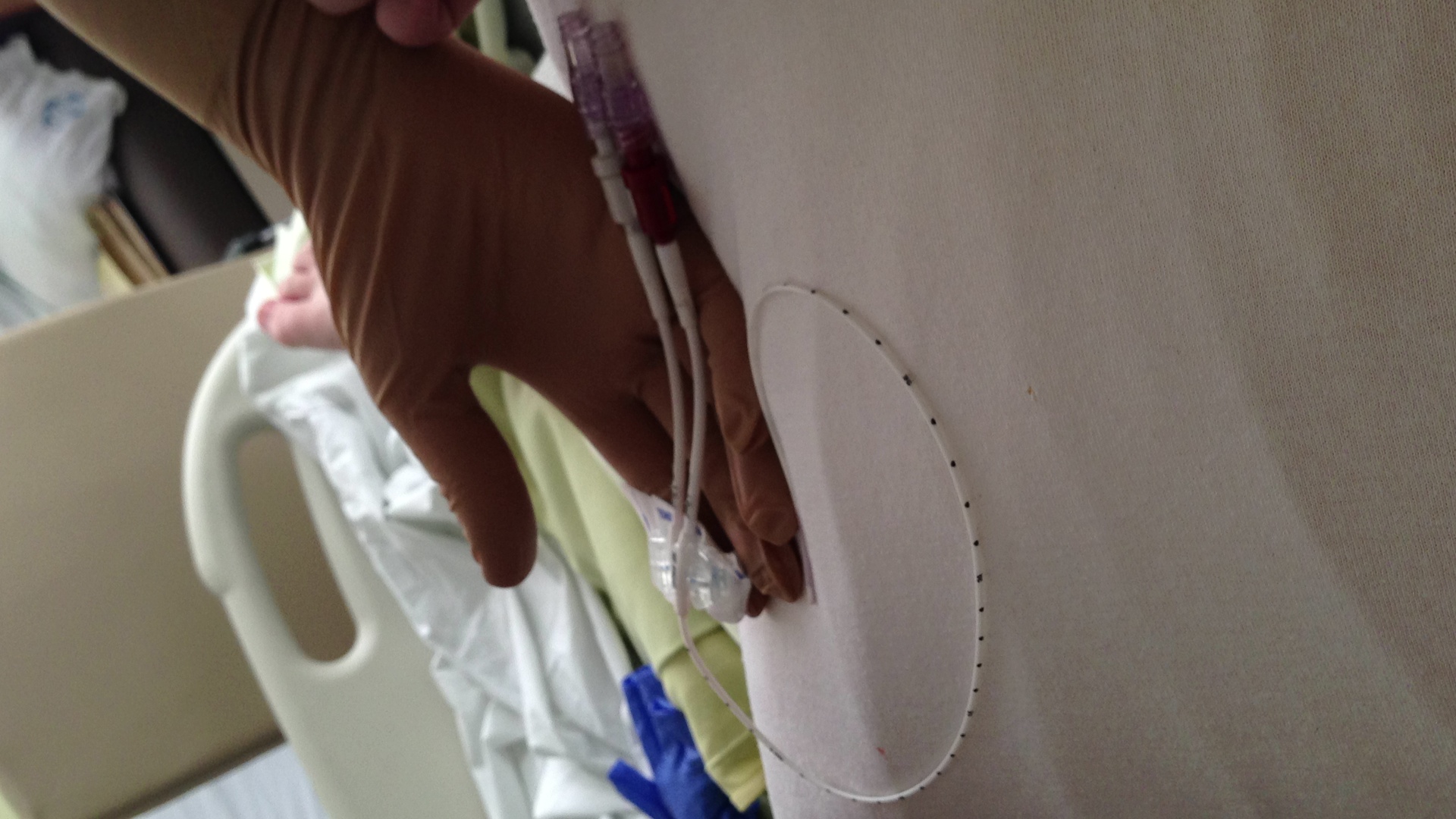
When the peripherally inserted central catheter is no longer required it is removed similar to a peripheral catheter. It is also discontinued when the patient develops catheter complications such as infection, damage, or blocked. It is a painless procedure that takes only a few minutes and can easily be completed as an outpatient procedure, usually by a trained nurse.

Only clinicians or nurses who have been trained to manage potential complications should remove a PICC. PICC removal can be accomplished either at the hospital or at a home setting by a qualified person. A physician’s order must be obtained prior to removing a PICC. While removing, it is vital to exert slow, intermittent traction without applying any direct pressure at the insertion site.

During the removal process, there is possibility that resistance may be present. This could be caused by a venous spasm. Warmth often relieves the spasm and after a brief period of time may easily be removed. But the catheter must never be forcefully tugged as this could break it. If still unable to remove it easily, the physician should be notified.

After it is completely removed, the actual catheter length should be measured and compared with the documented insertion length. The documented and actual length must be equal as this is the only way to confirm that the catheter has not broken and has been removed intact. If the length of the removed catheter is less than the documented insertion length, it indicates that part of the catheter is retained inside the vein and the physician must be notified immediately.
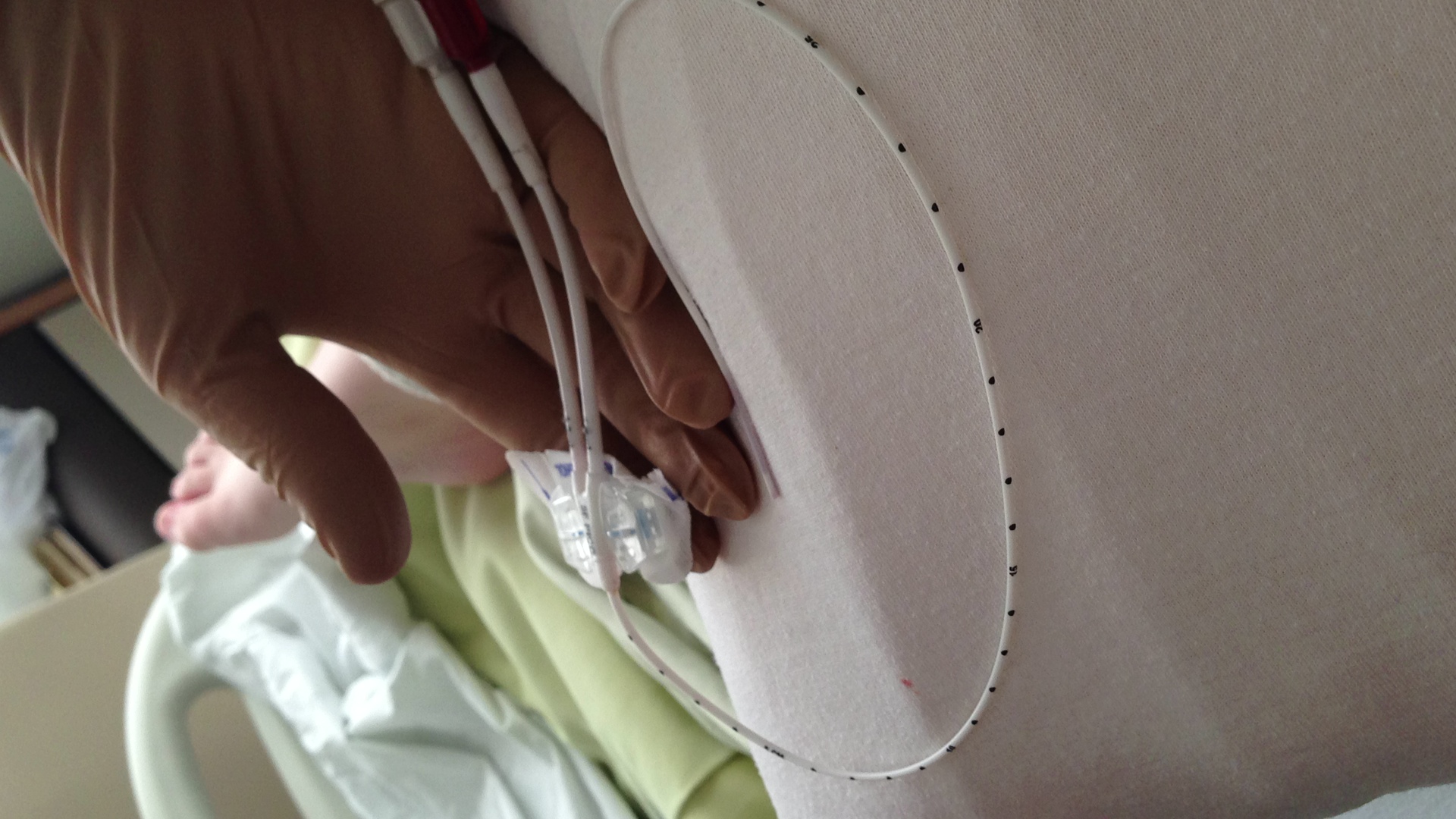
In addition, the catheter tip should also be examined to insure there is no breakage at the end. Again, if the tip is not intact, immediately notify the physician.

If infection is suspected, then the tip of the catheter is sent for culture. A prior order from the physician should be obtained before sending the tip for culture.

After removing the catheter, gentle pressure is applied at the insertion site with sterile gauze to prevent bleeding which is typically minimal, if at all. When the bleeding stops, the gauze is removed and a sterile dressing is applied. The dressing should remain for approximately 24 hours. After this time, the site should be assessed and a new dressing applied if needed.


Leave a Reply Cancel reply

You must be logged in to post a comment.

Donate


(Currency: CAD)

Categories

Recent Posts

  • Day-1 Hayley’s Total Pancreactomy & IV-Hell *Video’s*

    December 27, 2013
  • Day-2 Hayley Already Gets Out of Bed! (Video)

    December 26, 2013
  • Day-3 Hayley’s Up & Walking – First Steps*Video*

    December 26, 2013
  • Day-3 Hayley Talking – Graphic & Painful – What a Trooper *See Video*

    December 26, 2013
  • Day-4 – Cannot Find Vein in Feet & PICC Line Insertion (Video’s)

    December 25, 2013

    Room Make-Over @ Sickkids

    Room Make-Over @ Sickkids Hospital Toronto were Hayley spends a great deal of time. This Video is now part of the SickKids Video Library for distractions to assist other children in making their hospital stay a little brighter. She is always happy to help others.

    Hayley Devoe – CBC Radio Interview – Jun 18, 2013

    listen

    This is a radio interview done with CBC Radio Edmonton from the Alberta Stollery Children's Hospital May 31st, 2013. The interview was done one month after her 13 hour (TP/IAT) Total Pancreactomy & Auto Islet Transplant. By this time Hayley should have had a lot less pain than she was experiencing but we were remaining optimistic. Hayley had opportunity to do both radio and TV interviews to talk about being the 2nd child in Canada to undergo this type of rare surgery and also bring raise awareness to the wrath of Chronic Pancreatitis and the TP/IAT procedure. Hayley chose not to do any further interviews to support the surgery because she already knew in her heart that the surgery was NOT doing what it was supposed to. The surgery was done with almost no pre-testing. Looking back I am now wondering what did the doctor base his positive comment on? His words were that he was 99.9% sure that the surgery was going to help Hayley's pain considerably and maybe even stop it altogether! Never did he say it could make it worse...

    Latest Tweets

    • Could not fetch Twitter RSS feed.

    © 2012 childrenlivinginpain.com - Website and Hosting by iGreenhosting.net

    ‹ › ×