
Hayley after the second PICC Line London Hospital – Loopy!! The PICC is a feed tube. 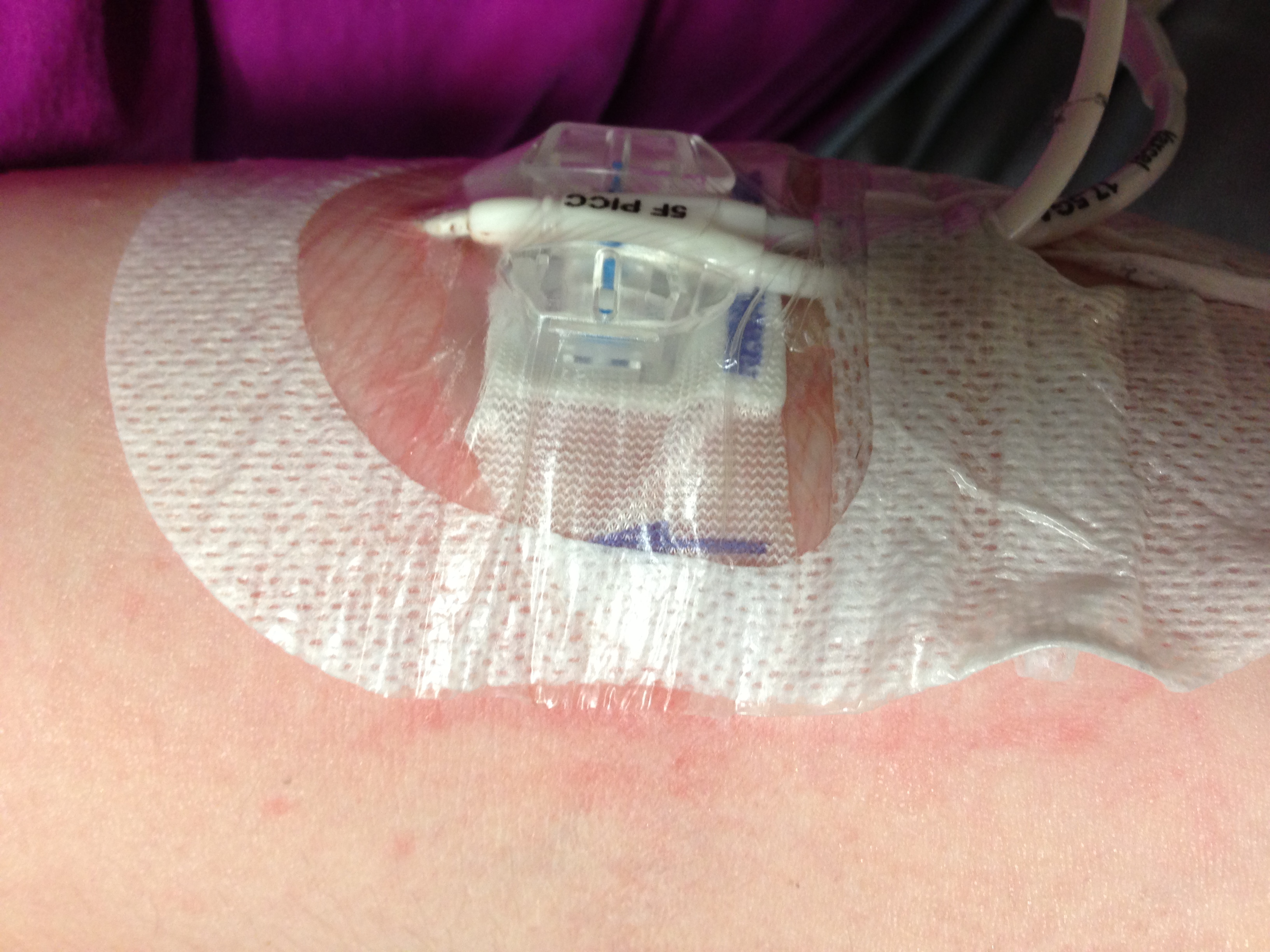
A PICC line is essentially a narrow flexible catheter inserted through a vein of the upper arm above the elbow until its tip reaches a very large heart vessel called the superior vena cava (SVC). Receiving a constant or regulated amount of medication or nutrition is less uncomfortable through a large vein than through numerous smaller insertions. Patients requiring frequent blood draws for tests or transfusions are likely candidates for PICC line therapy.
How is the PICC Installed?
Its placement simply consists of one insertion, which can be carried out in the home at times if necessary. Most often it is done in a hospital setting by a doctor, or specially trained registered nurse, using ultrasound technology to ensure proper placement. Following the insertion a chest x-ray will be taken to verify that all is in place.
Some of the instances in which a PICC line might be recommended, are for chemotherapy, nutrition therapy (TPN), extended antibiotic treatment, or multiple administrations of blood products. A PICC line is a reasonable alternative to other forms of administering drugs or blood products directly into a large vein and has few complications.
However, not all patients are suited to having a PICC line, whether for reasons of inability to tolerate the procedure, veins that are inadequate, skin sensitivities, or for inability to comply with instructions. The advantages of using a PICC line are many:
- Applicable for all ages from newborns to elderly
- Less traumatic insertion over
- Lowest risk of complications
- Can be inserted on an outpatient basis
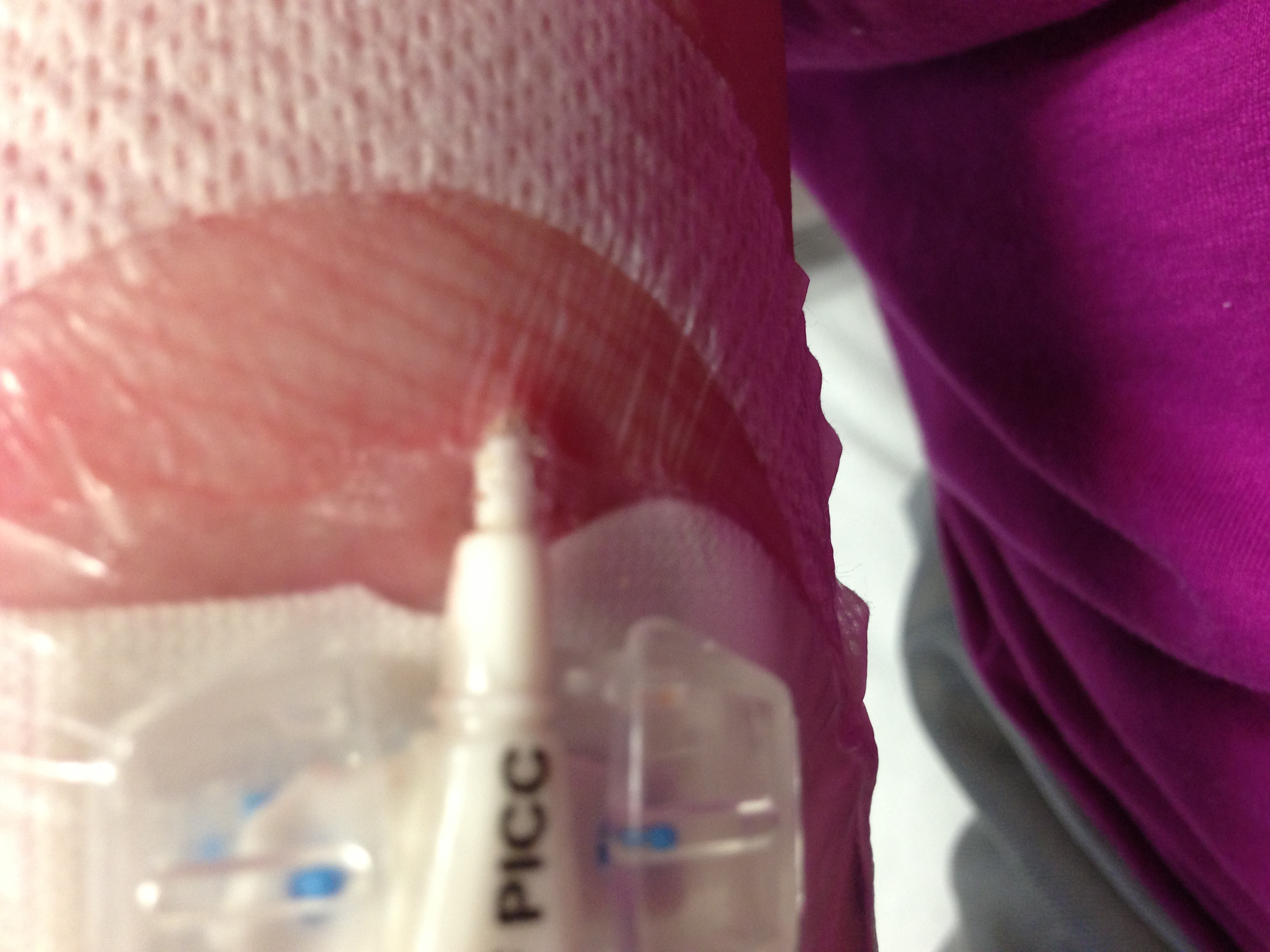
Therapy is usually maintained from 7 days to 3-4 weeks, but the line can remain in place for months, even years.
Can the Patient Care for the PICC Line?
Care of the PICC line includes efforts by both the visiting nurse and the patient or patient’s caregiver. Changing the infusion bag is probably not possible by the patient who is limited to the use of one hand. But the patient is taught how to administer a saline solution to flush the line daily, and in case of emergency should know how to change the solution and respond to an alarm on the pump. Nonetheless, the PICC line therapy generally is conducted by a visiting registered nurse who will also monitor the patient’s vital signs and daily activity levels to confirm that treatment is following a successful course.
Some signs to be aware of and to contact the nursing manager immediately:
- Redness and swelling around the insertion site, which may be minor and easily corrected but may also lead to infection (phlebitis).
- Occlusion of the catheter (obstruction, kinks in tubing, pressure on tubing or insertion site, which prevents steady flow of fluid through catheter)
The patient and his caregiver will be instructed not to allow any sharp objects near the line. They will be advised not to clean the skin near the line with any acetone containing cleanser and to keep the insertion site and dressing dry. Dressings should be changed only after proper training and completely aseptically.